
Some people mark time by seasons, school calendars, birthdays.
Lately, I’ve been marking time by the numbers on the scale — whether they go up, down, or sit there like a dare. It’s become a clock I don’t want but still check, a tick-tick-tick that lives in my bathroom and in the back of my head.
Relief and burden, at the same time
Getting a PCOS diagnosis was both. Relief because I finally had a name for what’s happening. Burden because a name isn’t a cure. Now everything comes with an asterisk: because PCOS.
I’m grateful for access to good care and a nutritionist who actually sees me. She talks about lifestyle and motivation and mindset, not just “hit this number.” That matters. She doesn’t live in a PCOS body and she doesn’t know all the downsides or the unnecessary sacrifices it can demand, but she respects the feelings behind them. That matters, too.
Still: in our latest session, one mention of going more restrictive and I broke. I had to pause for five minutes, text my husband while crying, and seriously consider ending the session early. That one phrase launched me back to when I tried that before and failed, and how I felt then — wrecked. That memory is close to the surface.
The doughy middle, clearly named
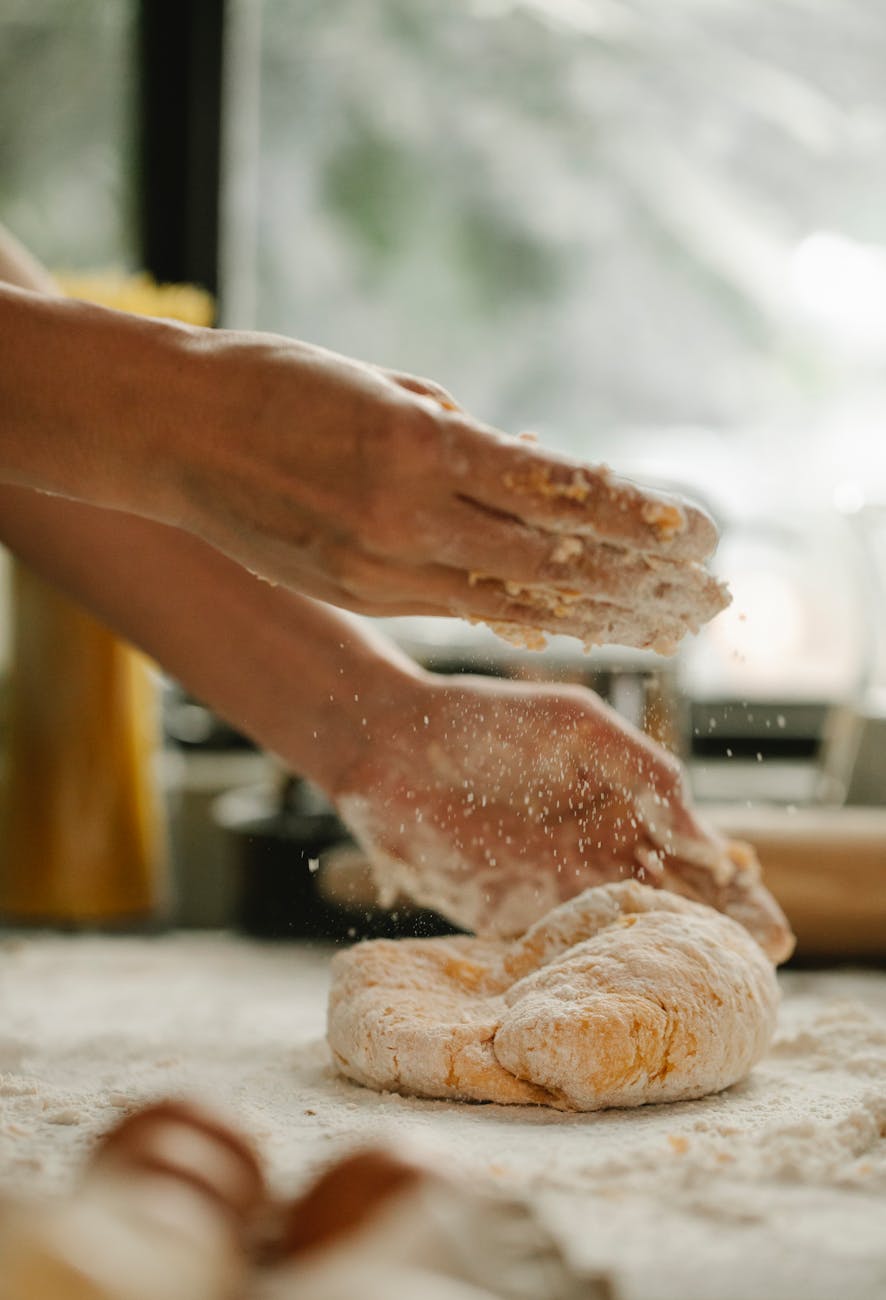
Let me be specific so there’s no confusion: I’m talking about my belly— the doughy middle PCOS insists on padding. I make the bread jokes because sometimes you need to laugh, but this is my waistline, not just a punchline.
I’ve eaten healthier, moved more, tracked more. I’m mindful of when I eat, what I eat, how much I drink, how much I sleep. I track data like it’s my job, and sometimes it makes me feel like I have three jobs. And even with all that, my middle stays stubborn. Not because I’m lazy. Not because I don’t care. Because hormones hijack the controls.
Movement is actually easier for me than it is for a lot of people. If I don’t fuel properly, though, the energy crash is worse. There’s no pretending around that. When I get it wrong, it’s not just tired — it’s like someone pulled the plug.
Dysmorphia and sensory overload
It’s not only the scale. It’s the mirror. It’s remembering how clothes used to fit versus how they fit now. It’s lying in bed and feeling my shirt press across my stomach or catch at my hips and wanting to crawl out of my skin. That level of sensory overstimulation is real. Fabric can feel like judgment.
There’s a quiet war between my body and my brain every time I get dressed. The whole day can tip based on a waistband or a seam. If you’ve lived this, you get it. If you haven’t, I’m glad for you — and also: please don’t offer easy answers.
The symptoms that stack
Add in the beard that makes me feel like a man when I’ve never wanted to be one. Add the heat flashes that leave me sweaty and gross out of nowhere. Add the mood swings that slam me sideways and make me feel peri-menopausal on a random Tuesday. Add the fertility tracking — over a year of it — and the way hope and fear braid together until I can’t tell which is which.
All of this work — the logging, the planning, the discipline — is for the hope that my PCOS could be pushed into remission so having kids might be easier in the future. There is no guarantee. Just a maybe. A maybe I carry around with my water bottle and my supplements and my sleep tracker.
The kitchen and the co-worker I chose
I am lucky in one huge way: my husband loves food and he loves me. He meets me in the kitchen. He experiments, he adjusts, he keeps showing up. We plant meals together so eating doesn’t feel like survival all the time. He helps me make the basics of living feel less like a full-time grind.
He’s the butter to my bread when everything else feels like plain toast.
Business and the long, slow proof
The same energy shows up in my business. From the surface it looks simple: write, publish, repeat. But underneath it’s decision after decision after decision — each one with a ripple effect. Systematizing takes forever. Growth takes forever. From the outside, it looks like a quick bake. From the inside, it’s a long proof — slow, invisible, necessary.
Some days the overwhelm wins and I don’t start because the stack of micro-choices is too tall. Some days I do start and still feel behind. Both can be true.
What I miss; what I want
I miss when life felt simple. I miss not thinking about my body at every turn. I miss clothes that just fit. I miss not clocking my water and my steps and my sleep and my macros like punch-in, punch-out.
I want to stop growing a gut and a beard for no good reason. I want to stop pretending mindset alone can outrun hormones. I want to feel like taking care of myself isn’t a second career. I want the rise without the endless waiting.
Where I am, honestly
This is the middle. The doughy, imperfect, in-process middle. It’s not pretty, but it’s alive. Some days I’m proud of that. Some days I’m just tired. Most days I’m both.
If you’ve got a hormonal disorder, you probably recognize this terrain. If you don’t, I’m genuinely glad — I wouldn’t wish the hot flashes, the mood whiplash, any of these moments on anyone.
I am still here. I am still trying. I’m still marking time by the scale because it’s one of the only clocks I’ve got, even if I hate it. I’m still stacking small habits because they add up, even when it feels like they don’t. I’m still choosing food that fuels instead of punishes. I’m still working a business that looks simple from the outside and is anything but underneath.
And I’m still learning to let my life proof — to give it the time it needs, without poking it every five minutes to make sure it’s rising.
If you’re living through your own “middle,” literal or metaphorical, I write more about this balance of body, business, and everything in between in my Bread & Butter newsletter.
Leave a Reply